
How to Use Reference Images to Get Better AI Avatars
· AI Avatars · 8 min read · Reels Farm Team
Reference images are one of the clearest ways to improve control in AI avatar generation. The problem is that many teams use them loosely, which adds noise instead of clarity.
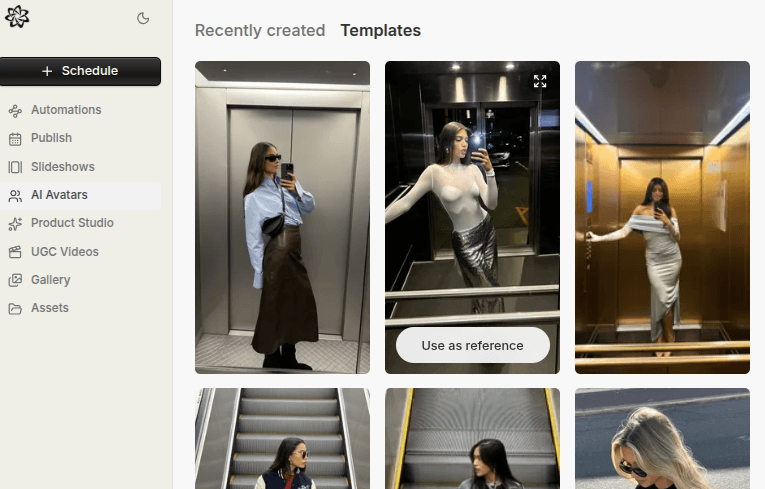
If prompts tell the model what you want, references help show it what you mean.
That is why reference images are so useful in avatar workflows. They reduce drift. They tighten identity. They help the output stay closer to a real visual target.
But only if the references are chosen well.
Quick Answer
To get better AI avatars from reference images:
- choose references that match the real goal
- use them to narrow the output, not widen it
- pair them with a clear prompt
- keep the winning references attached to the character or workflow
Reference images are strongest when they add control.
Step 1: Pick References That Match the Job
Not all references are doing the same work.
Some references are useful for:
- facial identity
- hair and styling
- mood
- framing
- brand fit
The best reference depends on what you actually need more control over.
If the problem is identity drift, choose references that stabilize the face and character. If the problem is brand mismatch, choose references that align the styling and visual world more clearly.
The mistake is dropping in whatever looks attractive without asking what problem the reference is supposed to solve.
Step 2: Use References to Narrow the Range
Good references reduce randomness.
They tell the system where to stay closer.
That means they should help answer questions like:
- what kind of person is this?
- what kind of styling fits this brand?
- how polished or casual should the output feel?
If your references are mixed, inconsistent, or pulling in very different directions, the result usually gets weaker.
Strong reference use is selective, not chaotic.
Step 3: Pair the Reference With a Better Prompt
References are not a replacement for direction.
They work best when the prompt and the reference agree with each other.
If the prompt describes a clean creator-style skincare visual but the references suggest an unrelated fashion editorial mood, the output will likely feel split.
A cleaner workflow is:
- decide the character role
- choose references that support that role
- write the prompt to match the same visual logic
This gives the generation a more stable center.
Step 4: Use Strong References for Reuse, Not Just One-Off Tests
Once a reference set produces strong results, keep it attached to that workflow.
That matters for:
- recurring brand characters
- campaign continuity
- product-specific creative sets
- content systems that need visual consistency
If the references disappear after one generation, you lose one of the most useful control layers in the whole process.
Step 5: Be Careful With Mixed Reference Sets
More references do not automatically produce better avatars.
Sometimes one or two strong references are more effective than a pile of loosely related images.
If you mix too many signals, the workflow becomes harder to control. A cleaner set usually helps the system understand the intended identity or styling better.
This is one of the simplest ways to improve output quality quickly. Reduce the noise.
Step 6: Save the Best Outputs as Reusable Characters
References are especially valuable when they lead to a character worth reusing.
If a reference-based generation fits the brand, save it as a character and carry that result forward. This creates a stronger production loop:
- references support the generation
- the generation produces a strong character
- the character becomes reusable later
That is much more useful than generating isolated wins that never become part of a broader content system.
Reference Quality Matters More Than Reference Quantity
Low-quality references create drag.
If the source image is unclear, heavily filtered, off-angle, or visually unrelated to the intended output, the generation has less useful guidance to work with. Cleaner references usually create cleaner control.
That does not mean every reference needs to look like a studio shoot. It means the image should clearly communicate the identity, styling, or visual direction you want the system to follow.
Common Mistakes
Using references without a clear reason
Attractive references are not enough. They need a job.
Mixing references with conflicting visual directions
This often weakens control instead of improving it.
Treating references like a replacement for prompting
Both layers should support the same goal.
Failing to reuse the winning set
If a reference set works, keep it tied to the character or campaign.
FAQ
How many reference images should I use?
Enough to create clarity, not so many that the output becomes confused.
Can the same references support several campaigns?
Yes, especially when the same character or visual identity matters across several outputs.
Are references mainly for consistency?
They help with consistency, but they are also useful for brand fit, styling control, and narrowing the visual range overall.
Should I replace references often?
Only when the current set is limiting the workflow or no longer fits the brand. Constantly changing the references usually weakens consistency.
Final Take
Reference images are one of the most practical control tools in AI avatar generation.
Used well, they make the output more directed, more repeatable, and more useful for real campaigns. The key is choosing them intentionally, pairing them with a matching prompt, and keeping the winning reference sets inside a reusable workflow.
Related tools
If you want to turn this topic into something usable right now, start with these tools.
Content Angle Generator
Generate content angles you can turn into hooks, captions, slideshows, or scripts.
Instagram Caption Generator
Create Instagram caption drafts for stories, lessons, launch posts, and offers.
CTA Generator
Create call-to-action lines for captions, carousels, videos, and offer-led posts.
Related reading
- How to Keep Character Consistency Across AI Avatar Generations
Character consistency usually comes from reuse and control, not from hoping every generation will magically match the last one.
- 5 AI Avatar Prompt Templates for Product Images
A product-focused AI avatar prompt should describe the character's role, the product's placement, the scene, and the final crop. A portrait prompt alone leaves those commercial requirements unspecified.
- How to Use GPT Image 2 Reference Workflows for Consistent Avatars
Consistency improves when reference selection, prompt clarity, and character-saving are treated as one process.
Related comparisons
- Best AI UGC Video Tools for Short-Form Content
A buying guide to AI UGC video tools, with ReelsFarm positioned for complete short-form content workflows.
- Best TikTok Automation Tools for Content Teams
A guide to TikTok automation tools for teams that need content creation, scheduling, publishing, and creative control.
- Best AI Slideshow Makers for TikTok
A guide to AI slideshow makers for TikTok, with ReelsFarm positioned for repeatable slideshow automation.
- Best AI UGC Tools for Ecommerce Brands
A source-checked guide to six AI UGC tools for ecommerce product content and publishing workflows.
Drive traffic to what matters on autopilot.
Create standout posts, line up your calendar, and publish consistently without juggling a dozen tools.