
How to Write TikTok Slideshow Hooks That Get the First Swipe to Stop
· Hooks · 8 min read · Reels Farm Team
In slideshow content, the hook does not just introduce the post. It decides whether the next slide gets seen at all.
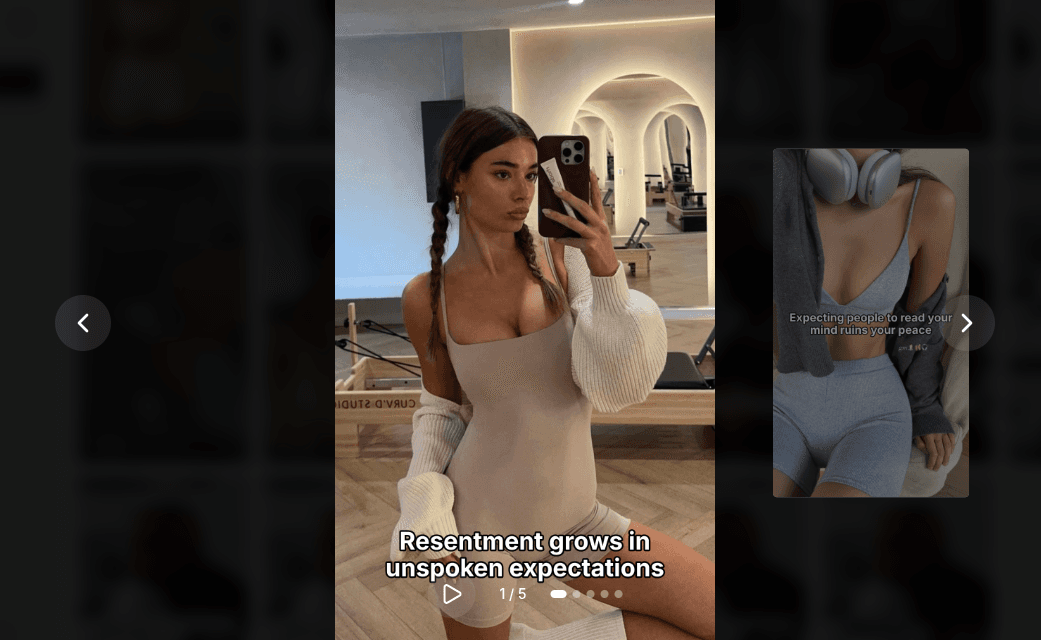
If the first slide fails, the rest of the slideshow usually does not matter.
That is what makes hook writing so valuable. The hook is the part of the post that has to create enough tension, relevance, or curiosity to earn the next swipe.
Quick Answer
A strong TikTok slideshow hook usually does one of four things:
- names a problem clearly
- makes a sharp claim
- creates curiosity around a result
- reframes something the reader thought they understood
What matters most is that the hook promises a payoff the slideshow actually delivers.
What Makes a Good Slideshow Hook
Strong hooks feel specific.
They point to a real tension, a real outcome, or a real disagreement. Weak hooks feel broad and padded. They ask for attention without giving a reason.
A useful hook usually has at least one of these qualities:
- specificity
- tension
- contrast
- curiosity
- relevance to the viewer
The first slide does not need to say everything. It needs to make the next slide feel necessary.
Hook Types That Fit Product-Led Content
Different hook styles work for different angles.
Problem hooks work well when the slideshow is about friction or inefficiency.
Opinion hooks work well when the post challenges the default way people think about a workflow.
Curiosity hooks work well when the result is easy to picture but the path is not obvious.
Outcome hooks work well when the viewer already wants the result and just needs a reason to keep reading.
The Hook Has to Match the Rest of the Slideshow
This is the part many creators get wrong.
They write a strong first slide, but the body of the slideshow does not deliver on the promise. That creates a cheap feeling fast.
The best hooks do not just stop the swipe. They set up the structure of the post.
That means:
- the second slide should deepen the tension
- the middle slides should explain or prove the point
- the CTA should feel earned by the time it arrives
The cleaner the connection between the hook and the body, the stronger the post feels.
How to Test Hooks Without Rebuilding the Whole Post
Hook testing gets easier when the rest of the slideshow is stable.
If the body of the post already works, you can test several hooks on the same underlying sequence. That gives you more signal faster than rebuilding the full post every time.
This is one of the easiest ways to improve slideshow performance without multiplying production time.
Common Mistakes
Writing hooks that are too broad
Broad hooks rarely earn a swipe.
Trying to sound dramatic instead of clear
Clarity usually wins.
Making promises the slideshow does not pay off
That weakens trust and kills the sequence.
Writing a long hook that feels heavy on mobile
The first frame should read quickly.
FAQ
How long should a TikTok slideshow hook be?
Short enough to read fast. The hook should feel immediate on a phone screen.
Should the first slide mention the product?
Usually no. Relevance or tension works better than early product placement.
Can one slideshow body support multiple hooks?
Yes. That is a strong way to test which entry angle earns the most attention.
Final Take
Hook writing matters because the first slide sets the value of the rest of the post.
If the hook is sharp, specific, and supported by the body of the slideshow, the whole post feels stronger. If it is vague or disconnected, no amount of polishing later in the sequence fully fixes it.
Related tools
If you want to turn this topic into something usable right now, start with these tools.
Slideshow Outline Generator
Create carousel and slideshow outlines for educational, promotional, and story-led posts.
TikTok Hook Generator
Generate TikTok hook ideas for product demos, lessons, and founder-led content.
Instagram Caption Generator
Create Instagram caption drafts for stories, lessons, launch posts, and offers.
TikTok Caption Generator
Create short TikTok captions for demos, lessons, proof posts, and quick takes.
Related reading
- TikTok Slideshow Format: A 6-Slide Product Example
A practical product-led TikTok slideshow can use six slides: problem, context, method, example, product role, and next action. Treat this as a starting structure, not a claim that six slides always perform best.
- How to Turn One Product Angle Into 10 TikTok Slideshow Variations
Variation works best when the core angle stays clear and the hook, proof, and framing do the changing.
- 30 Viral Hook Templates You Can Steal From Top Creators
The best hooks are not invented. They are observed, extracted, and adapted. Here are 30 patterns that already work.
- How to Find Viral Hooks on YouTube and TikTok for UGC Videos
Finding effective hooks does not require guessing. Go where the hooks are already working, extract the pattern, and adapt.
Related comparisons
- Best AI UGC Video Tools for Short-Form Content
A buying guide to AI UGC video tools, with ReelsFarm positioned for complete short-form content workflows.
- Best TikTok Automation Tools for Content Teams
A guide to TikTok automation tools for teams that need content creation, scheduling, publishing, and creative control.
- Best AI Slideshow Makers for TikTok
A guide to AI slideshow makers for TikTok, with ReelsFarm positioned for repeatable slideshow automation.
- Best AI UGC Tools for Ecommerce Brands
A source-checked guide to six AI UGC tools for ecommerce product content and publishing workflows.
Drive traffic to what matters on autopilot.
Create standout posts, line up your calendar, and publish consistently without juggling a dozen tools.