
TikTok Content Automation for Brands: What to Automate and What Not To
· Automation · 8 min read · Reels Farm Team
Brand teams usually do not fail because they automate too little. They fail because they automate the wrong layer and expect the system to make strategic decisions it should not be making.
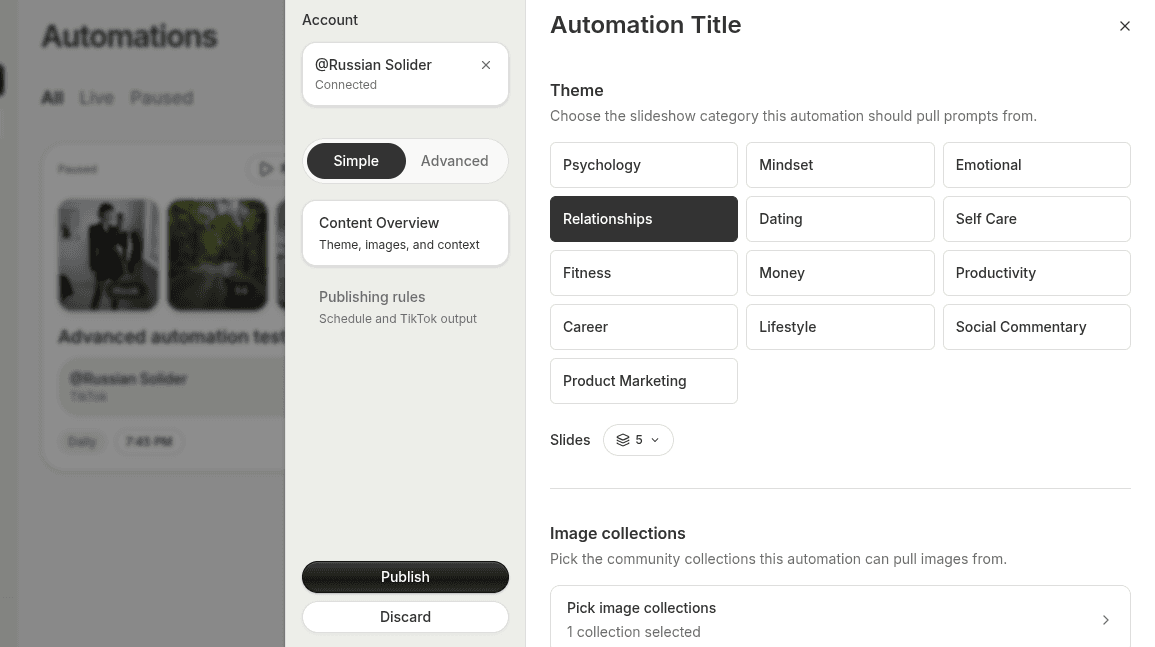
Brand teams want more output without lower standards.
That is why automation is attractive. It promises speed and consistency. The trouble starts when the brand asks automation to handle the parts of the workflow that still need taste and judgment.
Quick Answer
For most brands, automation should handle:
- repetitive production steps
- recurring scheduling
- reusable asset workflows
- repeatable content formats
It should be used much more carefully for:
- positioning choices
- new angle testing
- final quality judgment
- anything that changes the feel of the brand sharply
That is the line that matters.
What Brands Should Automate
Brands get the most value when automation handles the work that is structured enough to repeat cleanly.
That often includes:
- scheduling
- recurring slideshow generation
- reusable prompt workflows
- asset reuse across a stable format
- repeated publish settings
These are good automation candidates because they reduce manual drag without asking the system to invent the strategy.
What Brands Should Keep Manual
Some decisions are too important to flatten into defaults.
That includes:
- how the brand should sound
- what angles are worth testing
- which claims feel credible
- when the creative is starting to look stale
Those decisions shape trust. They also shape how distinct the content feels over time.
If a brand automates those choices too aggressively, the account often starts feeling generic even when the workflow itself looks efficient.
Draw the Line Around Repetition
A useful rule is simple.
If the task is repetitive and proven, it is usually a good automation candidate.
If the task is strategic, new, or taste-driven, it deserves more human control.
This is why automation tends to work better once a brand has already proven one or two repeatable formats. The system has something stable to scale.
Use Review as the Safety Layer
Review is what keeps automation from flattening the output.
That review does not need to be slow or heavy, but it should exist. A weekly rhythm is often enough to catch:
- prompt drift
- visual repetition
- weaker captions
- posts that no longer feel aligned with the brand
Without that layer, the workflow may stay efficient while the creative quality gradually slips.
Common Mistakes
Automating unproven formats
If the format is still being figured out, automation adds speed before clarity.
Treating all brand content like repeatable production
Some content is strategic enough to need closer judgment.
Removing review too early
That usually leads to quality drift that takes time to notice.
FAQ
What should a brand automate first?
Usually scheduling and one proven repeatable format.
Should brands automate every TikTok post?
No. Repeatable formats are the best starting point. New campaigns and important tests usually need more manual care.
Can automation still feel on-brand?
Yes, if the brand rules are clear and the review layer stays active.
Final Take
TikTok content automation is most useful for brands when it handles repetition without pretending to handle taste.
The strongest systems save time on the structured work and protect the parts of the workflow that still need judgment. That balance is what keeps automation helpful instead of flattening the brand.
Related tools
If you want to turn this topic into something usable right now, start with these tools.
Content Angle Generator
Generate content angles you can turn into hooks, captions, slideshows, or scripts.
Free Caption Formatter
Format TikTok and Instagram captions with cleaner spacing and line breaks. Keep your original wording, review the result, and copy it for posting.
Instagram Caption Generator
Create Instagram caption drafts for stories, lessons, launch posts, and offers.
Related reading
- How to Automate TikTok Posting: A Step-by-Step Workflow
To automate TikTok posting, connect the correct account, prepare a content batch, review each post, and schedule it. Then check delivery results. Recurring content generation is a separate decision from scheduling finished media.
- How to Build a TikTok Slideshow Workflow That Actually Scales
Scale usually comes from standardizing inputs and organizing the workflow, not from pushing more content through a messy system.
- The Scrape, Stitch, Schedule Workflow for Short-Form Content
Three steps. Scrape proven hooks from viral videos. Stitch them to your CTA. Schedule everything. This is the workflow that turns content creation into a system.
Related comparisons
- Best AI UGC Video Tools for Short-Form Content
A buying guide to AI UGC video tools, with ReelsFarm positioned for complete short-form content workflows.
- Best TikTok Automation Tools for Content Teams
A guide to TikTok automation tools for teams that need content creation, scheduling, publishing, and creative control.
- Best AI Slideshow Makers for TikTok
A guide to AI slideshow makers for TikTok, with ReelsFarm positioned for repeatable slideshow automation.
- Best AI UGC Tools for Ecommerce Brands
A source-checked guide to six AI UGC tools for ecommerce product content and publishing workflows.
Drive traffic to what matters on autopilot.
Create standout posts, line up your calendar, and publish consistently without juggling a dozen tools.