
Professional Translations
These slides show how to change blunt speech into corporate language to help users navigate office politics.

The most-watched career slideshows open with a numbered list of mistakes, a dare, or a before-and-after. Use a list of five to seven slides to show specific workplace habits or professional translations.
Get 50 career slideshow ideas matched to your website, or start making slideshows free.
These slides show how to change blunt speech into corporate language to help users navigate office politics.
These slideshows list specific behaviors that help a person look more senior or competent to their peers.
These posts highlight common errors or traps that can hurt a person's reputation or job chances.
These examples provide a sequence of actions to help users reach a specific professional goal or industry.
Sorted by views. Open any slideshow to see every slide.
The promise of wild email endings encourages people to swipe through for funny or bold ways to communicate with colleagues.
Users facing disrespect will swipe to find specific words to defend their intelligence and set boundaries with coworkers.
This title teases a way to quit a bad job without burning bridges, making people save it for future use.
Students looking for productive ways to spend their break will swipe to see the specific list of four activities.
Translating rude thoughts into professional language makes people swipe to learn how to navigate office politics safely.
Job seekers will swipe to avoid common mistakes and learn better ways to present themselves during interviews.
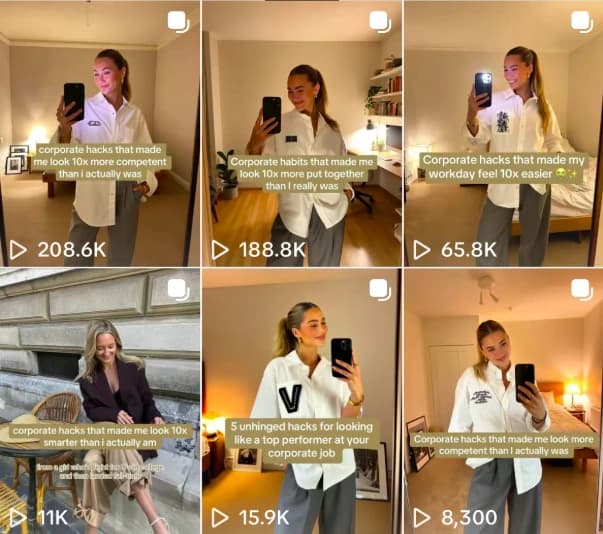
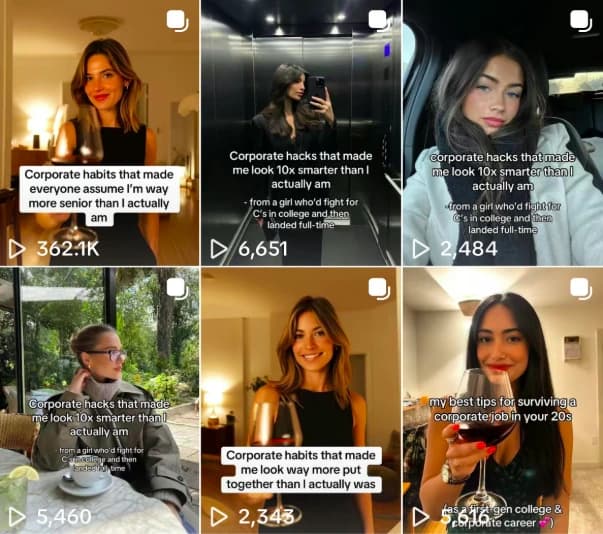
Sharing secrets to appearing more experienced prompts people to swipe to see which specific habits lead to faster respect.
A list of essential skills for resumes encourages viewers to swipe so they can update their own professional profiles.
The idea of taking control of a career through hacks makes people swipe to gain a competitive edge.
A step-by-step guide to a prestigious industry attracts people who want to follow a proven path to success.
People want to avoid looking powerless, so they swipe to check if they are making these seven mistakes.
An expert perspective on interview questions makes people swipe to find the exact answers that recruiters want to hear.
A story about rapid advancement makes people swipe to learn the secrets behind getting a senior role quickly.
The mention of unethical promotion methods creates curiosity, making people swipe to see the controversial tips.
Fear of making fatal errors drives candidates to swipe through the list of mistakes that ruin their chances.
Roasting specific locations invites people to swipe and comment on which office area they work in.
A personal story about language learning invites viewers to swipe through the journey of moving to a new country.
The claim of a guaranteed job method attracts ambitious people who want to swipe for a roadmap to success.
Warning about damaging a professional reputation makes people swipe to ensure they are not making these errors.
Young professionals will swipe to hear the blunt advice that they did not receive during their formal education.
The promise of unethical methods from a recruiter makes viewers curious to swipe through the secret tips.
Using a recruiter as a source for unusual advice encourages people to save the post for later.
A personal story about being laid off creates an emotional hook that makes people want to see the journey.
Promising to make someone look smarter helps viewers swipe to find ways to secure full-time job offers.
Sharing habits that changed a work life invites people to comment on their own daily routines.
Focusing on tiny habits that build competence makes people want to swipe to improve their professional image.
Relating to daily stress and offering weird solutions for burnout encourages users to share with tired friends.
A step-by-step guide from a Wall Street professional provides a clear roadmap that people will save.
Pointing out why meetings fail makes managers want to swipe to see how to improve their leadership.
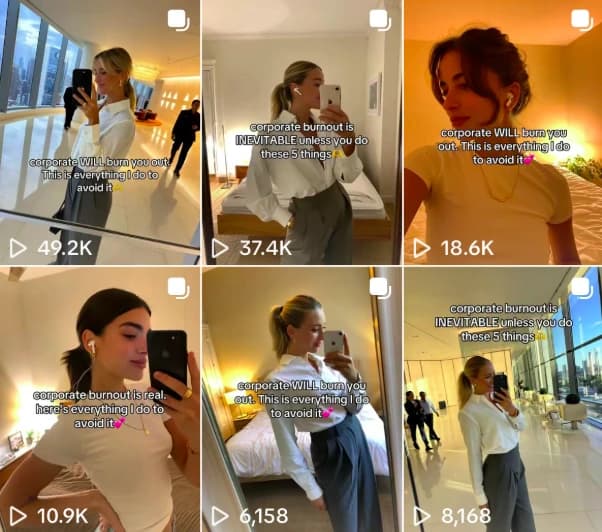
The claim that burnout is inevitable creates urgency for viewers to learn the five necessary prevention steps.
Asking which office type people belong to prompts viewers to comment and identify with the different locations.
Comparing nature to city life uses a relatable feeling to spark debate in the comments section.
Targeting people who feel behind in life offers comfort and makes them want to read the advice.
Highlighting hacks that led to a promotion attracts those tired of working hard without seeing results.
Using the word unhinged to describe performance hacks makes the content feel edgy and worth swiping through.
Showing how to look more competent by fixing mistakes encourages viewers to swipe for quick professional wins.
Sharing embarrassing lessons makes the creator relatable and makes people curious about the specific mistakes made.
Warning about traps for specific age groups prompts people to swipe so they can protect their growth.
An analyst sharing how they got a dream internship provides high-value proof that people will save.
Lessons learned the hard way suggest valuable wisdom that viewers will swipe through to avoid similar errors.
The promise of intense, life-changing leadership lessons encourages viewers to swipe through the slides to find the specific advice mentioned.
Sharing a personal financial mistake from youth creates curiosity about the solution, prompting users to save the post for future reference.
Claiming to double efficiency while working on Wall Street makes people want to swipe to learn these high-level professional habits.
New interns will swipe through to gain the insider knowledge that the creator wishes they had possessed before starting their first role.
By telling users what not to say, the post teases a superior communication method that people will want to copy and use.
The idea of habits that save someone at work every week appeals to busy professionals looking for quick ways to manage their workload.
A direct question about writing a professional summary attracts job seekers who need immediate, practical help with their resumes.
The provocative question about interview mistakes in a specific year triggers a sense of urgency for viewers to check their own skills.
Detailing the exact steps taken to land a specific role makes people swipe to see the successful interview process.
Citing interviews with top experts from major tech firms makes the promised resources feel highly valuable and worth saving.
Younger viewers will swipe to hear advice from someone who has already achieved success on Wall Street at a young age.
The promise of appearing more professional than one actually is appeals to people wanting to improve their corporate image easily.
A recent promotion at a major firm provides social proof that makes the daily habits worth swiping through to learn.
The relatable story of struggling in college makes the promised hacks for looking smarter feel achievable for anyone.
Listing prestigious companies creates a strong desire for viewers to swipe and see the specific actions that led to those interviews.
Focusing on manager relationships targets employees who want to avoid common mistakes and improve their workplace dynamics.
Warning about career traps in specific age groups makes people swipe to ensure they are not making the same errors.
The concept of hidden corporate truths encourages first-year employees to swipe through to prepare for their new environment.
Focusing on taking ownership of a career path motivates viewers to swipe for actionable advice on professional growth.
The contrast between college grades and professional success makes the promised hacks highly intriguing to a wide audience.
Sharing mistakes learned the hard way encourages people to swipe through to avoid making those same errors themselves.
The warning about burnout makes viewers want to see the specific habits used to maintain mental health.
Providing a list of essential questions for new leaders prompts saves from people who want to use them later.
Promising ways to appear smarter despite past academic struggles makes the advice feel relatable and highly useful.
The promise of easier work life through specific rules motivates people to swipe for practical guidance.
The idea of becoming dangerously educated for free sparks curiosity about low-cost ways to gain knowledge.
Describing management as a child's game attracts stressed workers looking for unconventional ways to simplify their roles.
Using a controversial statement about degrees makes people swipe to see the counter-argument or supporting evidence.
Hard truths about leadership appeal to ambitious managers who want to grow through difficult experiences.
Highlighting traps for specific age groups creates urgency for young professionals to learn these truths immediately.
Targeting people in their 20s makes the survival tips feel personalized and highly relevant to that demographic.
A claim about guaranteeing a job from college attracts students looking for a proven path to success.
Framing the content as a guide for staying sane appeals to anyone feeling overwhelmed by office life.
Making jokes about specific company levels encourages people to comment and share based on their own experiences.
Asking a fundamental question about job hunting prompts viewers to swipe for the answer.
Addressing the difficult job market makes people look for solutions to a common and stressful problem.
Listing specific behaviors for respect provides a clear roadmap for employees wanting to improve their status.
Sharing habits that led to multiple promotions makes the viewer want to see the exact routine used.
The concept of rules for the corporate world suggests a guide for navigating professional social structures.
Offering specific questions for networking helps people prepare for real-world professional conversations.
Sharing psychological interview shifts promises secret knowledge that helps job seekers secure offers at major companies.
Claiming burnout is unavoidable creates urgency for viewers to swipe through the five specific solutions provided.
The promise of stinging truths about tech careers encourages people to read more to prepare for reality.
Identifying signs of not being a favorite prompts users to save the list for their own workplace assessment.
A story about rapid promotion despite average grades makes these clever shortcuts highly desirable to followers.
Highlighting unusual methods that ended years of wasted effort makes people curious about these specific management tactics.
This post teases how to appear more professional quickly, which appeals to those seeking fast career improvements.
Sharing how to manage a full schedule and side hustle attracts busy professionals looking for relief.
Asking for a specific response template helps job seekers who are currently struggling with difficult rejection emails.
Observing successful women in corporate settings promises viewers a blueprint for high-level professional behavior.
Specific habits for high-pressure Wall Street roles offer valuable survival tips for analysts in intense environments.
A current professional sharing his learning resources provides a direct roadmap for aspiring product managers.
Using the word unhinged suggests unconventional advice from an expert that differs from standard recruiter talk.
Warning about inevitable burnout drives viewers to seek the complete list of preventative lifestyle habits.
The idea of looking more put together than one actually is offers a simple way to improve perception.
Detailing how to move from apprentice to associate quickly motivates people to avoid common career traps.
Linking specific sacrifices to a massive salary increase makes the advice feel practical and worth following.
Stating that burnout is certain unless certain steps are taken forces the reader to look for solutions.
Providing a list of necessary video interview questions helps candidates prepare to succeed in remote meetings.
Suggesting that internal candidate comparisons are unexpected makes people want to see the hidden truth.
The promise of finding work during a slow market encourages job seekers to swipe through the list of active sectors.
By teasing the very first step toward a dream job, this post prompts users to save the guide for later.
This title appeals to people wanting to improve their professional image through simple, relatable shortcuts.
Framing a common interview question as a specific prompt makes viewers swipe to find the ideal answer.
The mention of hidden secrets regarding high-level roles makes people curious to see what they might be missing.
Using the word unhinged suggests unconventional advice that people will want to share with their colleagues.
Sharing a path to a senior role with minimal experience motivates viewers to swipe for the specific strategy used.
Warning about the inevitability of burnout forces readers to look for the five specific solutions provided.
A personal shift from motivation to a new system creates curiosity about the specific lifestyle change described.
Highlighting things that no one talks about about gets people to swipe to discover those hidden advantages.
Challenging the reader's readiness to lead creates a sense of urgency to check their own skills against the list.
Promising specific websites for internships without experience makes this a highly saveable resource for students.
Linking burnout prevention to a high salary makes the advice feel both practical and highly desirable.
Using HR expertise to provide a checklist gives viewers a reason to save the post for their next interview.
The story of rapid promotion despite average grades makes the hacks feel accessible and worth swiping through.
Combining burnout prevention with a high income claim makes the tips feel essential for career longevity.
A recap of a specific professional journey provides a realistic look at career growth that people follow.
The idea of looking polished while learning on the job attracts people who want quick professional wins.
Revealing a new way to use AI for job offers makes people want to swipe to see the exact method.
A transformation from a struggling student to a full-time professional makes the advice feel proven and trustworthy.
Most of the 120 slideshows on this page use 5 to 7 slides, and the typical one uses 6. Use enough slides to finish one idea, with one point per slide.
4 of these 120 slideshows passed 1 million views, and 15 passed 100,000. The page is sorted by views, so the most-watched slideshows come first.
Of the slideshows on this page, 23% promote an app and 49% grow the creator's own following without selling anything.
Use them as inspiration, not as posts to copy. Keep the format or angle that suits you, then make it with your own photos, words and facts.
Pick a format from this page, then build it in ReelsFarm: write the hook and slides with AI, add your images, and schedule the post to TikTok. You can start for free.
Every day you wait, someone in your niche is collecting the views your brand should already own.









Create standout posts, line up your calendar, and publish consistently without juggling a dozen tools.